Group exhibition
Museo de Arte Contemporáneo Querétaro (MACQ) / Múzeum súčasného umenia Querétaro. Manuel Acuña, s/n Corner with Reforma, Queretaro City 76020 Mexiko
Duration: 13. februára – 17. mája 2026
Vystavujúci autori/Exhibited authors
Štefan Balázs, Katarína Balúnová, Martin Derner, Žofia Dubová, Viktor Fuček, Ján Hrčka, Zuzana Križalkovičová, Róbert Makar, Stano Masár, Matúš Maťátko, Monika Pascoe Mikyšková, Eva Moflárová, Juliana Mrvová, Michal Murin, Tomáš Rafa, Vladimíra Weiss Savkaničová, Michaela Šuranská, Peter Valiska-Timečko, Boris Vaitovič, Katarína Janečková Walshe
Produkcia/Production: pointA o.z., Slovensko
Koprodukcia/Co-production: Museo de Arte Contemporáneo Querétaro (MACQ) /MX/
Partneri/Partners: Galéria Koniareň, Slovenská organizácia umenia a kultúry, Akadémia umenia Banská Bystrica /SK/, Veľvyslanectvo Slovenskej republiky v Mexiku
Projekt z verejných zdrojov podporil Fond na podporu umenia ako hlavný partner.

Vystavené diela/Exhibited Works
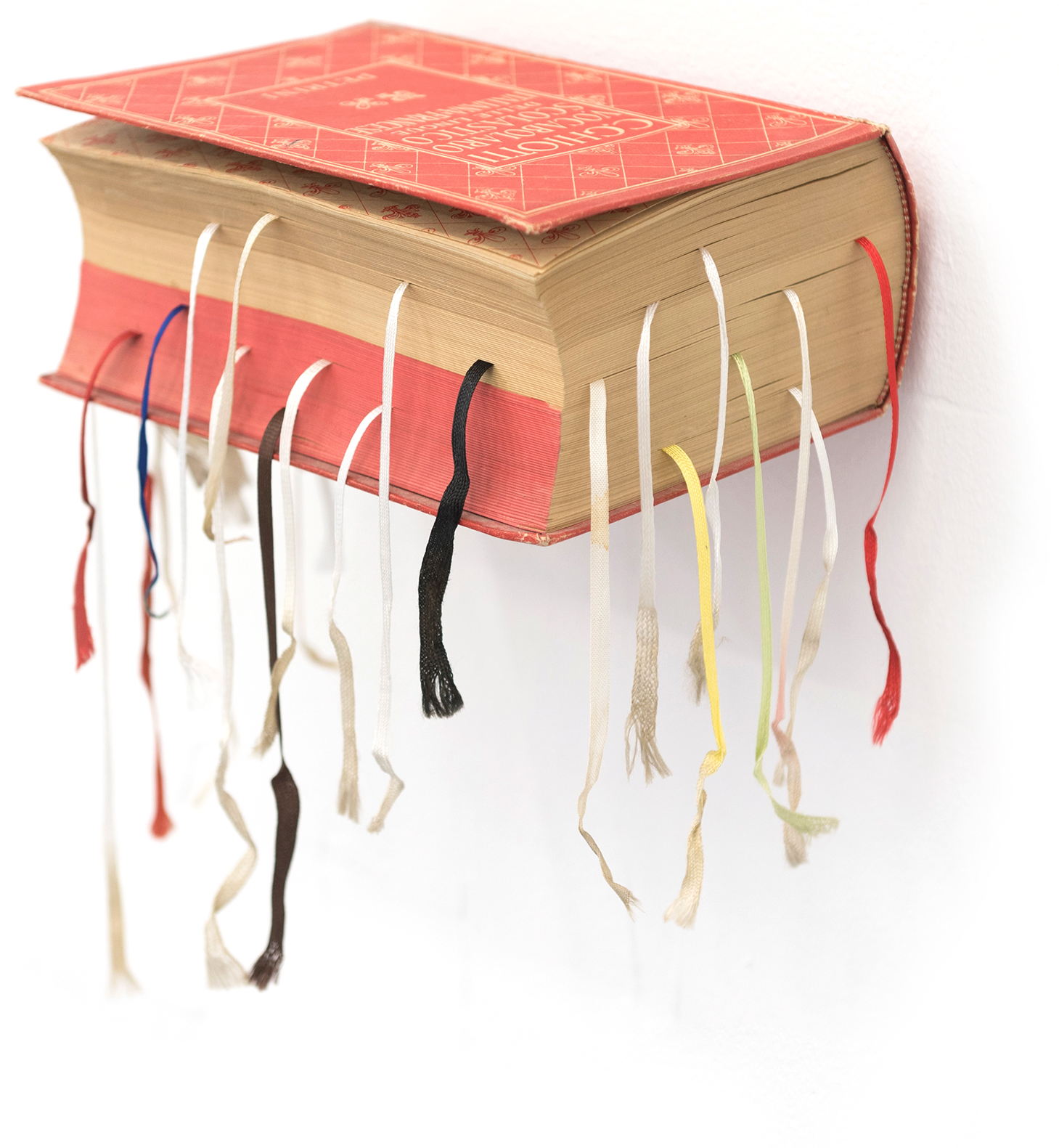
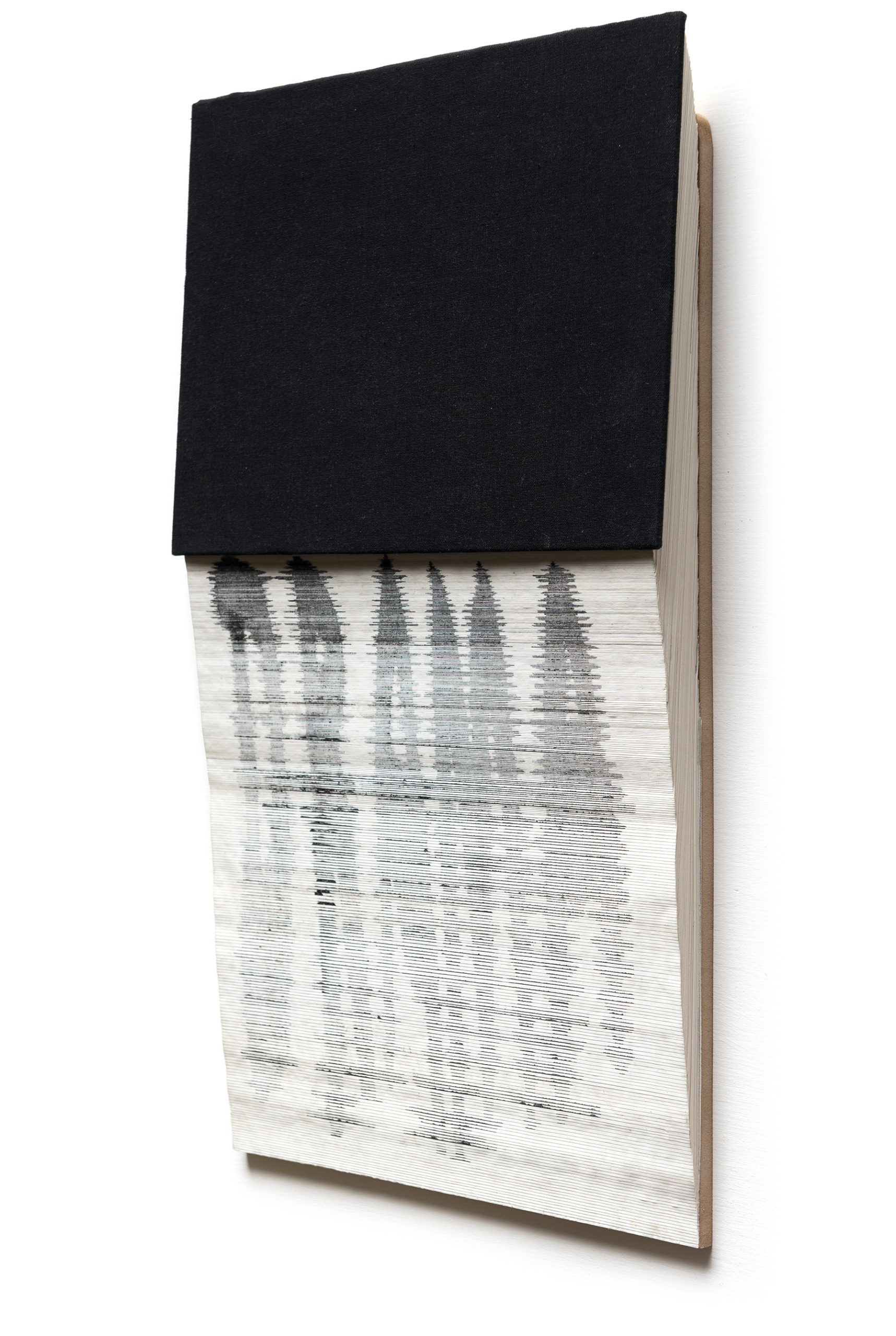
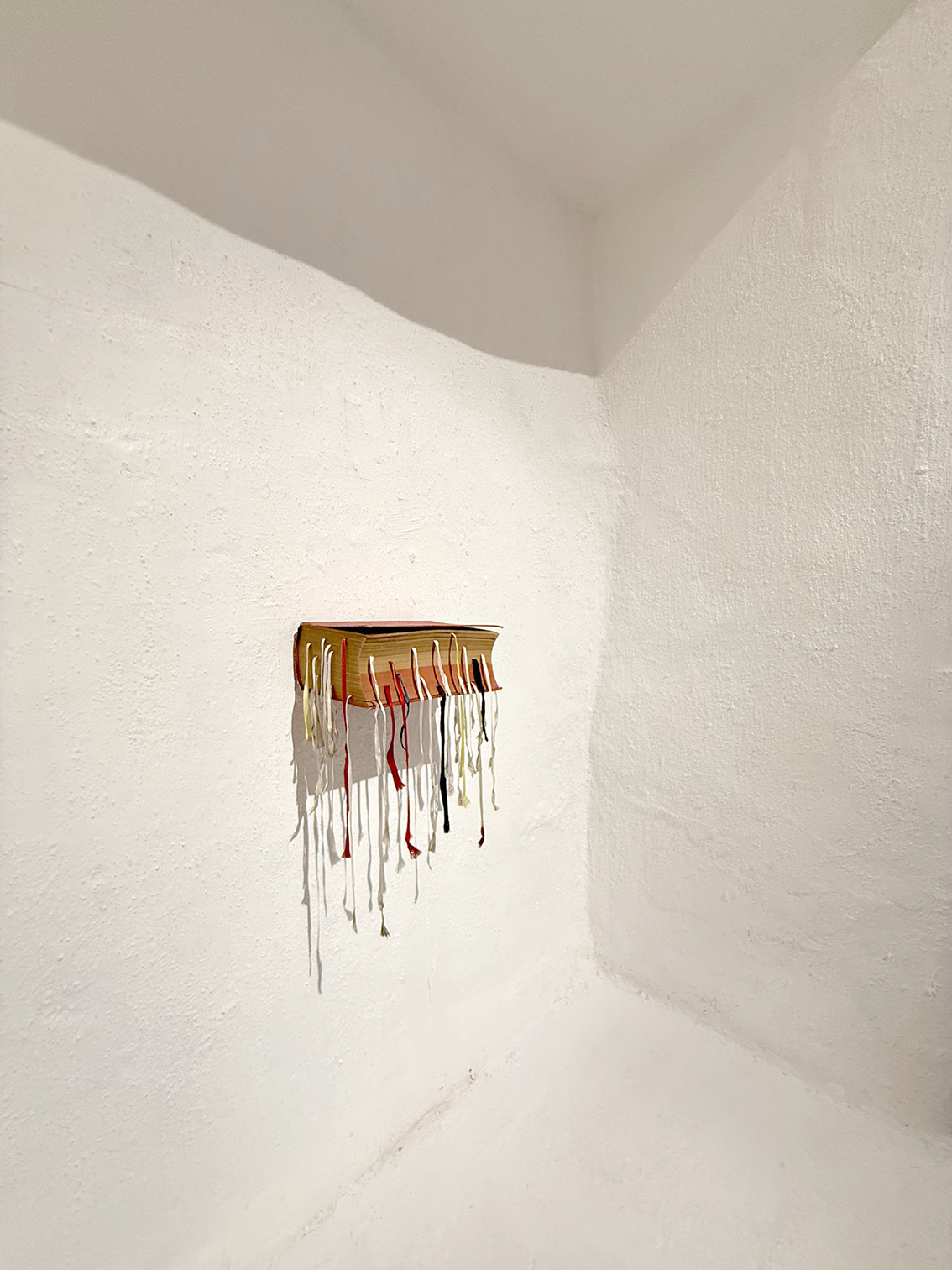
Typography XV., 2017, Object Collage, book paper, 47,5 x 26,7 cm x 4,7 cm
El Destino / Osud
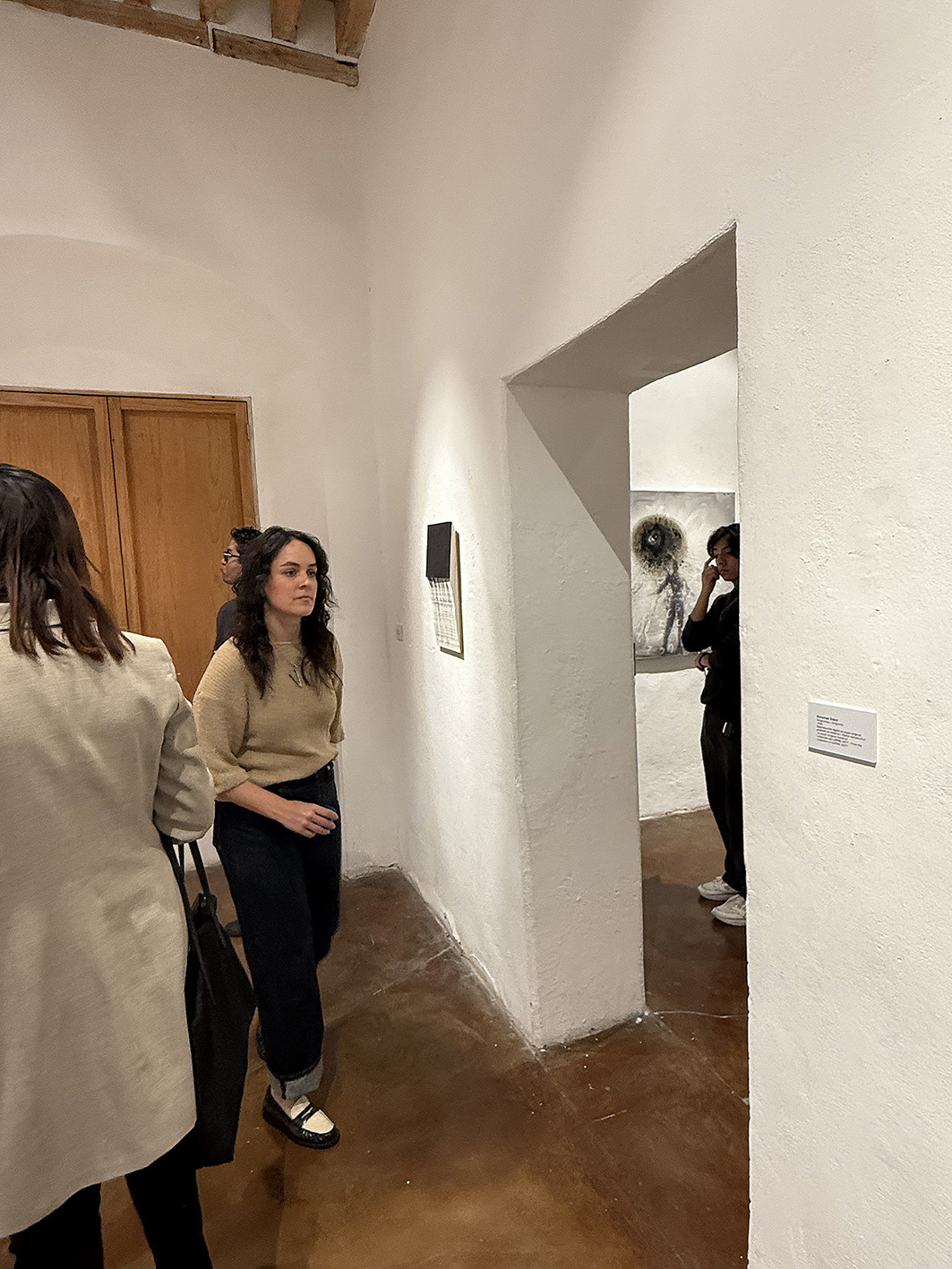
Projekt El Destino / Osud reflektuje ľudský osud v širších súvislostiach, pričom odkazuje na život a dielo významného umelca Kolomana Sokola, ktorého tvorba zanechala výraznú stopu tak na Slovensku ako aj v Mexiku. Výstava slúži ako most medzi Slovenskom a Mexikom, skúma Sokolov prínos pre svet umenia a zároveň sa zaoberá univerzálnymi témami osudu, identity a hľadania domova. Koloman Sokol mal pohnutý život plný úskalí, nikdy sa však nevzdal umenia. Výstava skúma zložitý vzťah medzi osobnými cestami a kolektívnymi skúsenosťami, kladie si otázky o osude verzus slobodnej vôli, zaoberá sa tým, ako naše rozhodnutia formujú životy nás, ale aj iných v neustále sa meniacom svete. Umenie Kolomana Sokola zobrazovalo ľudské osudy v celej ich šírke, od sociálno-kritických motívov, cez psychologické štúdie, po zobrazenie momentov jednoduchého života, čo sú témy, ktorými sa zaoberajú aj súčasní slovenskí umelci. Výber zahrňuje už etablovaných slovenských umelcov, rovnako ako mladú generáciu. Jadrom projektu El Destino / Osud je skúmanie osudu ako mnohostrannej sily, ktorá formuje naše životy. Každý umelec predstavuje jedinečnú interpretáciu toho, ako osud ovplyvňuje osobné príbehy, kultúrne identity a univerzálne skúsenosti. Diela slúžia ako vizuálne metafory pre vlákna osudu, ktoré nás spájajú a charakterizujú spoločnú ľudskú skúsenosť.
Cieľom výstavy El Destino / Osud je propagovať slovenské umenie vo svete, podporiť medzikultúrny dialóg a reflektovať rozmanité životné skúsenosti. Prostredníctvom rôznorodých umeleckých prejavov - od maľby, grafiky, objektu, videa až po sériu performancií in situ, výstava poukazuje na zložitú súhru medzi osudom, odvahou a hľadaním miesta, ktoré môžeme nazývať domovom. Výstava je rozdelená do troch celkov: Kniha osudu, Cesta a Hľadanie domova, ktoré cez kolektívnu pamäť nadväzujú na životnú cestu Kolomana Sokola od jeho mladých rokov, cez emigráciu až po nájdenie druhého domova v exile. Jednotlivé celky výstavy sú uvedené reprodukciou diela zo zbierky Galérie Kolomana Sokola v Liptovskom Mikuláši.
Projekt je pokračovaním cyklu prezentácie súčasného slovenského umenia v zahraničí v spolupráci s Galériou Koniareň v Trebišove. Projekt z verejných zdrojov podporil Fond na podporu umenia.
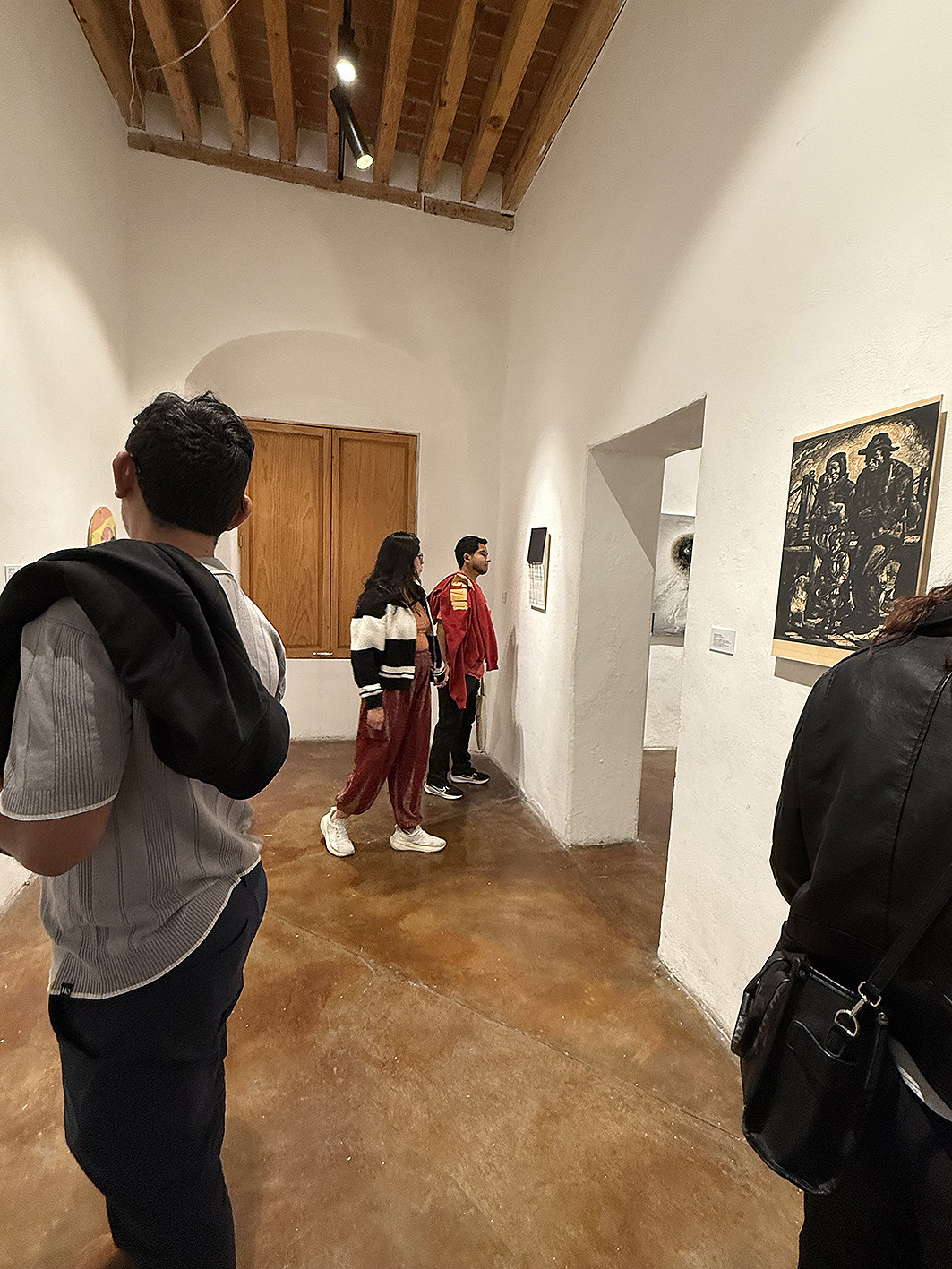
Kniha osudu je úvodnou kapitolou výstavy, ktorú otvára reprodukcia Kolomana Sokola Baníci (1935). Koloman Sokol sa narodil v roku 1902 v chudobnej robotníckej rodine v Liptovskom Mikuláši, čo formovalo jeho neskoršie videnie sveta. Citlivo vnímal sociálnu nespravodlivosť, vo svojich raných dielach sa zameriaval na zobrazovanie periférie spoločnosti expresívnym rukopisom. Aj keď odkazuje na konkrétne problémy doby, jeho človek a existenciálna dráma sú univerzálne. Diela súčasných slovenských umelcov reagujú na tému ľudského osudu cez reflexiu identity v priestore a čase, s výzvou k scitliveniu voči neľudským bytostiam a hlbšiemu pochopeniu pominuteľnosti. Nakoľko je mozaika osudu dopredu daná a nakoľko osud seba a iných každodenne ovplyvňujeme svojimi rozhodnutiami?
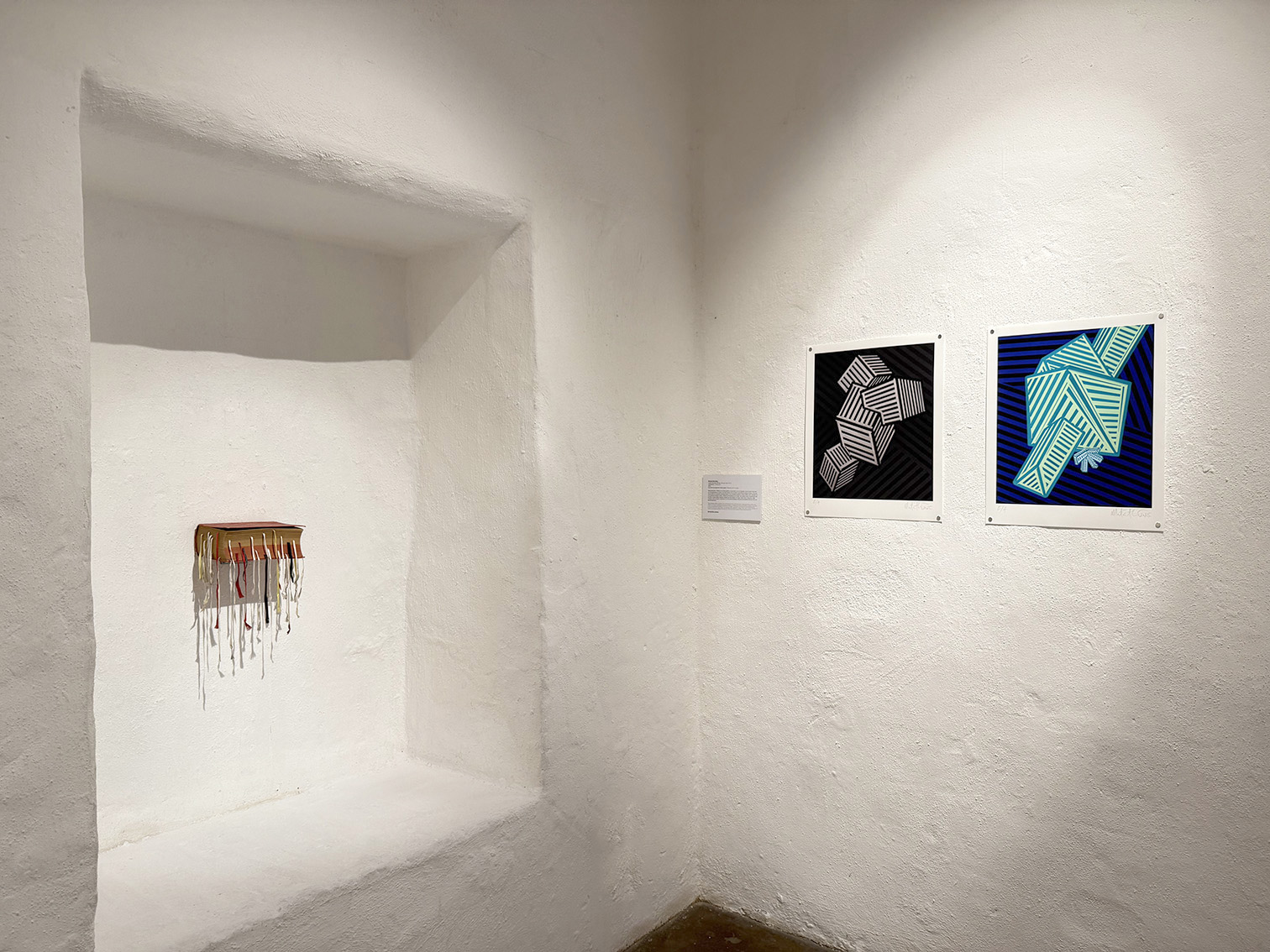
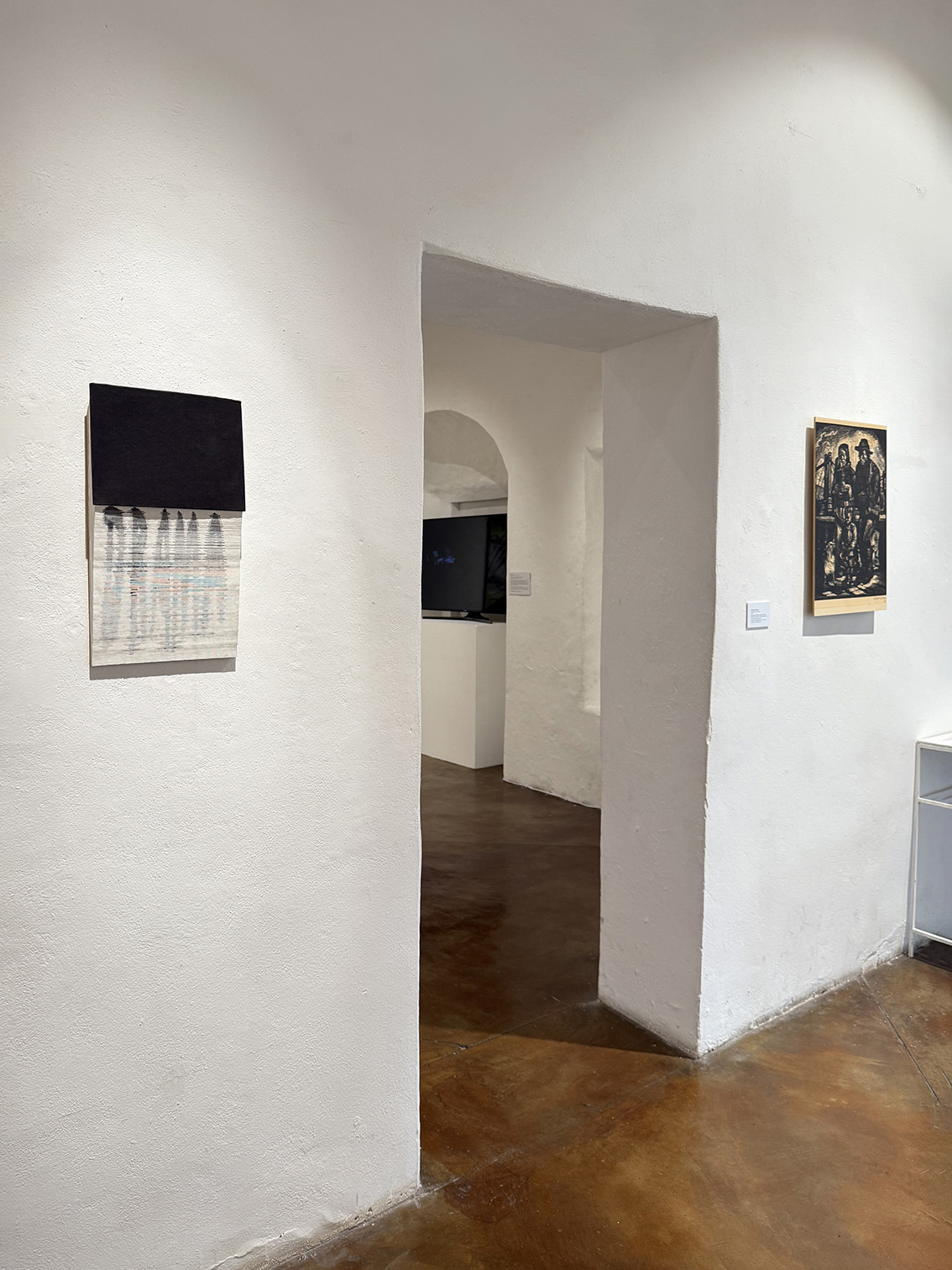
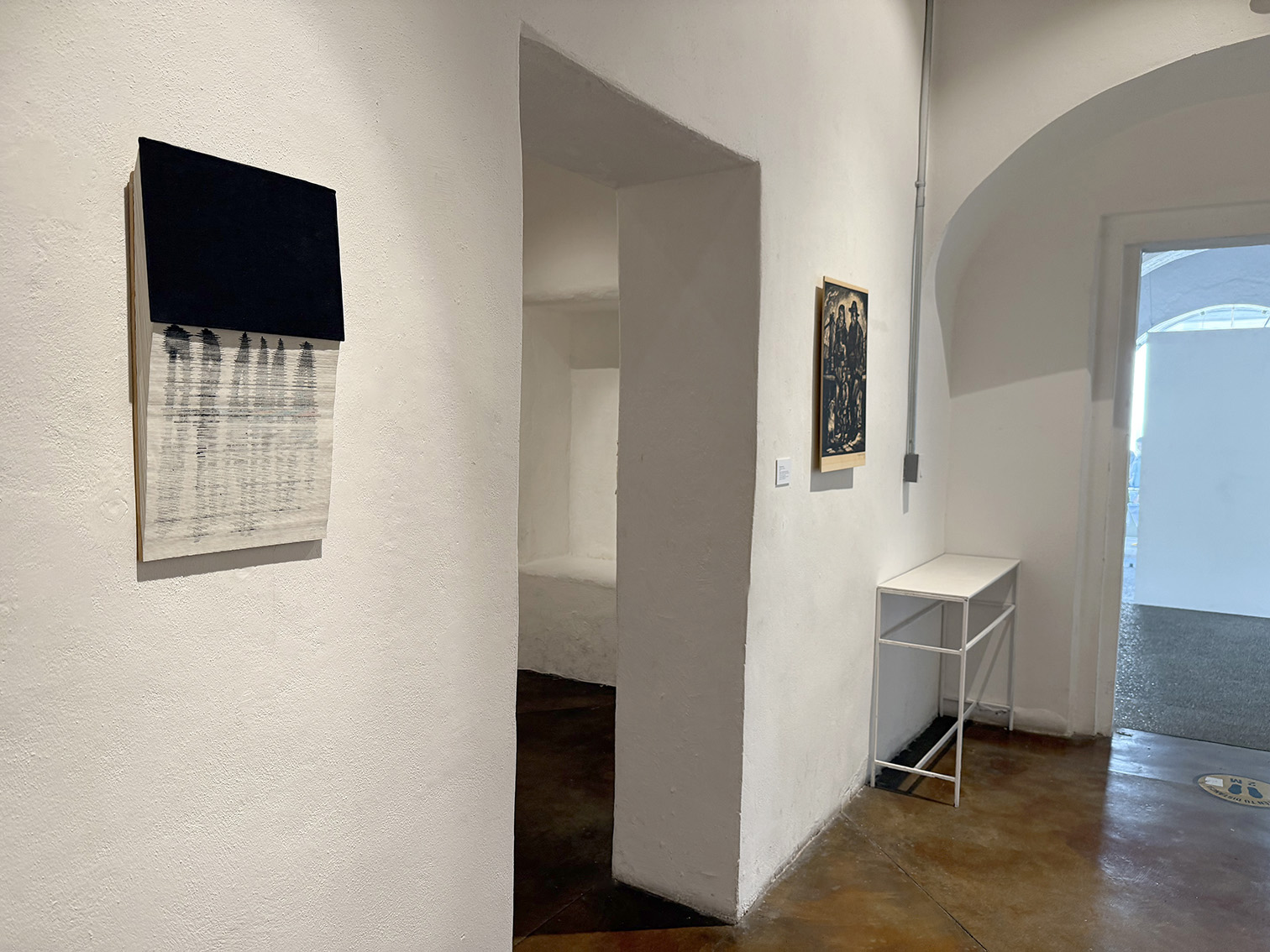
Róbert Makar na ploche troch grafík vedie kreslený dialóg nad smerovaním Kolomana Sokola v tridsiatych rokoch minulého storočia, keď jeho životné cesty opisovali trojuholník Mexiko – Československo – USA. Dielo De-konštrukcia K.S. je sériou digitálnych kresieb, v ktorých autor voľne prekresľuje portrét Kolomana Sokola z roku 1929 ako odkaz na pôsobenie síl osudu. Grafická séria Matúša Maťátka akcentuje skladbu nerastov a minerálov zo slovenských baní. Banská práca, s ktorou často súviselo vykorisťovanie slabých a bohatnutie mocných, výrazne ovplyvňovala formovanie histórie regiónu. Autor zjednodušeným tvaroslovím referuje na Platónske telesá ako základné kamene štruktúry sveta. Video performancia Viktora Fučeka The Fate of Our World funguje ako alegória splietania vzoru sveta, v ktorom mocenské elity svojím egocentrizmom opakovane narúšajú krehkú stabilitu spoločného žitia a pretvárajú jemné pradivo reality vo svoj prospech. Ako zdôrazňuje Donna Haraway, niektorí navajskí myslitelia chápu hry s povrazom ako formu, ktorá obnovuje rovnováhu medzi ľudskými a neľudskými bytosťami. Prírodný svet je hlavnou témou práce Juliany Mrvovej. Vo svojich maľbách a kresbách spája lyrizmus s bádateľským pohľadom, transformuje osobné záznamy na vrstvené kompozície, ktoré odhaľujú krehkosť sveta a pominuteľnosť ako princíp kolobehu života. Mladá autorka Michaela Šuranská v maľbe a jej presahoch analyzuje krajinu ako časovo vrstvenú entitu modifikovanú ľudskou aktivitou. Opakovane sa vracia na tie isté miesta, aby zaznamenávala drobné premeny a iniciovala pátranie po hlbších koreňoch pamäte. Vo svojej tvorbe vyzýva k spomaleniu a scitliveniu na mieste, na ktorom sa práve nachádzame. Martin Derner sa vo svojej práci dlhodobo zameriava na predmety, ktoré nás obklopujú, aby prehodnotil ich funkcie a určil im novú konceptuálnu hodnotu. Vystavené diela využívajú nájdený materiál knihy, ktorú autor manipuluje do širších významov. Kniha je súborom vedomostí a príbehov, ktoré spoluurčujú naše rozhodnutia a tým zároveň náš osud. Taktiež Stano Masár je konceptuálnym umelcom, ktorý v rámci svojej umeleckej praxe manipuluje každodenné predmety do nových pozícií existencie, pričom často pracuje s elementom času a jeho reprezentácie. V diele Time Off dekonštruuje nástenné hodiny tak, aby už nemohli ukazovať čas. Vytvára tak novú realitu, ktorá otvára priestor na zamyslenie, spochybňuje to, ako vnímame svet, a hľadá odpovede na základné otázky bytia. Intermediálny umelec Boris Vaitovič vo svojich prácach často relativizuje zvyčajné schémy myslenia a ich vizuálne reprezentácie. Na výstave predstavuje maľbu Roztrúsenie ľudskosti, ktorá zobrazuje človeka ako univerzálnu bytosť naprieč časom a priestorom.
Sekcia Cesta prezentuje diela, ktoré referujú k fyzickému putovaniu, sociálnej migrácii, ale aj duchovnému sebapoznávaniu. Cesta je dôležitým aspektom ľudskej skúsenosti, kedy vykročenie z komfortnej zóny môže viesť k transformácii a rastu. Koloman Sokol sa počas svojho života často vydával na cesty, napriek tomu si svoj rodný kraj vždy nosil so sebou. V rokoch 1925 - 1932 študoval na Akadémii výtvarných umení v Prahe. Štipendijný pobyt v Paríži bol významným podnetom pre jeho ďalšiu tvorbu. V roku 1936 sa zúčastnil na výstave československej grafiky v Palacio de Bellas Artes v Mexico City, na základe čoho ho mexická vláda pozvala vyučovať grafiku na Escuela de las Artes del Libro (Škola knižných umení) v Mexico City. Katedru grafiky viedol od roku 1937 do roku 1942, kedy pre zhoršený zdravotný stav manželky odchádza do Spojených štátov. Po skončení 2. svetovej vojny sa vracia do Československa a opätovne do USA, kde neprestáva tvoriť až do vysokého veku, často čerpajúc zo svojho mexického obdobia. Jeho diela sú obrazmi hlbokej ľudskej skúsenosti, človeka, umelca, emigranta.
Film Tomáša Rafu Refugees Are Welcome Here je špecifický dokument, ktorý zachytáva posun migrantov v rámci Európy. Zobrazuje stret túžob po slobode, strachu z neznámeho, vyostrené emócie. Kamera bez komentára dáva možnosť nahliadnuť za ostnaté drôty a necháva voľné pole na vytvorenie si vlastného názoru. Grafika Petra Valisku-Timečka, vytvorená autorskou technikou odtláčania boxerských úderov, zobrazuje utečenku – matku s dieťaťom v kompozícii evokujúcej sakrálne motívy. Kontrast medzi intímnym výjavom a násilnou povahou procesu tvorby zrkadlí drsnú realitu migračnej krízy. Autorov úder, primárne chápaný ako deštruktívny nástroj, sa tu stáva tvorivým gestom, ktoré prostredníctvom šablóny konštituuje novú estetickú a obsahovú hodnotu, ako zápas o zachovanie ľudskosti v prostredí konfliktov. Textilné dielo Evy Moflárovej Calm Borders vyjadruje nielen fyzické hranice nášho tela, ale hlavne psychologické hranice, ktoré určujú náš pohľad na svet. Samotný materiál, ktorý si autorka zvolila, odkazuje k starostlivosti a dôležitosti dotyku ako základným hodnotám humanity. Abstraktné diela Štefana Balázsa ukazujú možnosti posúvania fyzických a mentálnych hraníc. Autor vo svojich dielach referuje k imaginatívnym mestám minulosti či budúcnosti, kde geometria slúži ako štrukturálny rámec pre skúmanie časových a priestorových dimenzií. Séria 3D fotografií Zuzany Križalkovičovej s názvom Freedom zobrazuje stav tela bez pôsobenia gravitácie. Dielo je pokusom priblížiť pocit subjektívnej slobody ako fyzický vzťah k priestoru, ktorý je predstavovaný ako emócia, na ktorú nemajú vplyv spoločenské hodnotenia. Maľby Žofie Dubovej sú emotívnom svedectvom o krajine, ktorou prechádza. Kráčanie prepája naše telo s okolitým prostredím v prirodzenom rytme, kedy dokážeme plnohodnotne vnímať detaily. Autorka zachytáva atmosféru, profil krajiny posúva k abstrakcii. Maľba rovnako ako samotná cesta je pre ňu prostriedkom sebapoznania.
Hľadanie domova: Koloman Sokol stratil domov už ako dieťa, keď ho spolu so súrodencami opustila matka. Počas svojho života opätovne domov hľadal, nachádzal a strácal, od Československa, cez Mexiko do USA, ktoré sa stali jeho poslednou destináciou. Pri znovu vytváraní domova mu bola najdôležitejšou oporou manželka, umelkyňa Lýdia Kratinová-Sokolová.
Interdisciplinárny umelec Michal Murin vo svojom diele reaguje na miesto dočasného domova Kolomana Sokola, Mexico City. Z lepiacich pások vytvára fiktívnu mapu metra, ktorou kladie divákovi viacero otázok: Je to geometrická abstrakcia? Je to kompozícia farebných línií? Je názov diela otázka pre diváka z Mexico City, aby sa zorientoval v mape? Je to otázka turistu, ktorý sa stratil v mape metra Mexico City? Je to otázka milovníka umenia? Citácie z dejín umenia prezentuje maliarka Vladimíra Weiss Savkaničová v obrazoch zo širšej série Matka, gesto, fragment. Svätá rodina od Michelangela sa stáva opakujúcim sa leitmotívom, vzorom ideálnej rodiny, na ktorom autorka skúma identitu ženy na pomedzí materstva a umeleckej tvorby. Prehodnocovaním rodových stereotypov sa vo svojich maľbách zaoberá aj Katarína Janečková Walshe, ktorá skúsenosť materstva rozširuje o boj za ľudské práva. Žena - matka tak prestáva byť pasívnym prijímateľom osudu a stáva sa politickou aktivistkou solidarity s utláčanými. Autorka vníma vzťahy v rodine ako silné emocionálne puto, kde starostlivosť o blízkych a partnerská sexualita spolu úzko súvisia. Monika Pascoe Mikyšková znázorňuje krehkosť, ale aj pevnosť rodinných vzťahov ako sieť koreňov a vetiev. Organické formy evokujú rodokmeň, kde ľudské väzby nadväzujú na prírodné cykly – rast, vädnutie, regeneráciu. Previazanie s prírodou nadobúda fyziologickú povahu, kde najdôležitejšia je energia blízkosti. Umelec Ján Hrčka skúma históriu svojej rodiny v sérii malieb svojho rodiska, predmestia Bratislavy prezývanej „Mexiko“. Prví obyvatelia kolónie Dornkappel boli zväčša chudobní, svoje obydlia stavali z provizórnych materiálov. Urbánna anarchia sa stáva pre umelca základom pre expresívne výtvarné zobrazenie. Video performancia Kataríny Balúnovej, inšpirovaná Heideggerovou esejou Building, Dwelling, Thinking, prehodnocuje domov ako ontologický akt. Telo – primárny subjekt – sa konfrontuje s tehlou ako základným objektom stavby, čím odhaľuje esenciu bývania: nie statickú architektúru, ale dynamickú súhru pohybu a hmoty. Dom sa stáva domovom cez budovanie vzťahov, rodí sa v napätí medzi pevnosťou materiálu a krehkosťou existencie.
Katarína Balúnová
El Destino / Osud
The El Destino / Osud project reflects on the question of human fate across a broader range of contexts, drawing upon the life and work of Koloman Sokol, a significant Slovak-born artist whose work has left a distinct mark on the art of both Slovakia and Mexico. The exhibition serves as a bridge between the two countries, exploring Sokol's contribution to art history while simultaneously exploring the universal themes of fate, identity and the search for home. Koloman Sokol led a tumultuous life full of hardships, but he never gave up on his artistic vision. The exhibition examines the complex relationship between personal paths and collective experience, posing questions about the conflicts between fate and free will and how our decisions shape not only our own lives but also those of others within a constantly changing world. Koloman Sokol's art depicted the full scope of human fate in all its diversity, from socio-critical motifs through psychological studies to depictions of everyday moments—themes which continue to inspire contemporary Slovak artists. With a selection of artworks by both established figures and the younger generation of Slovak artists, the emphasis of the El Destino / Osud project is placed on an exploration of fate as a multifaceted force that shapes all of our lives. Each of the featured artists presents a unique interpretation of the ways in which fate influences personal stories, cultural identity and universal experience. Their works serve as visual metaphors for the threads of fate that connect us and define our shared humanity.
The main aims of the El Destino / Osud exhibition are to promote Slovak art throughout the world, to foster intercultural dialogue and reflect upon the diversity of life experiences. The various means of artistic expression showcased in the exhibition, including painting, graphics, objects, video and a series of in situ performances, highlight the intricate interplay between fate, courage and the search for a place that we can call home. The three sections of the exhibition, Book of Fate, Journey and Search for Home, explore the life journey of Koloman Sokol, from his youth in Slovakia to his emigration and acceptance of a second home in exile, viewed through the prism of collective memory. The individual sections of the exhibition are introduced with reproductions of works from the collection of the Koloman Sokol Gallery in Liptovský Mikuláš.
The project is a continuation of an ongoing cycle produced in collaboration with the Koniareň Gallery in Trebišov which seeks to present contemporary Slovak art to foreign audiences.
This project is supported with public funding from the Slovak Arts Council.
The first section of the exhibition, Book of Fate, opens with a reproduction of Koloman Sokol's Miners (1935). Sokol was born in 1902 into a poor working-class family in Liptovský Mikuláš, and this background would do much to shape his subsequent worldview. He was acutely sensitive to social injustice, and his expressively rendered early work focused on depictions of those subsisting on the periphery of society. Although his art directly confronted the pressing issues of his own time, his approaches to the human figure and existential dramas are truly universal in scope. Other works by contemporary Slovak artists respond to the theme of human fate through reflections on identity in space and time, challenging us to sensitize ourselves to the nature of non-human beings and encouraging a deeper understanding of transience. To what extent is the mosaic of fate predetermined, and to what extent can we influence our own fate and that of others through our everyday decisions?
A series of three graphics by Róbert Makar conducts an illustrated dialogue on the trajectory of Koloman Sokol's life in the 1930s, and the triangle which his life was played out: Mexico – Czechoslovakia – USA. De-construction of K.S. is a series of digital drawings in which the author freely reinterprets Koloman Sokol's 1929 portrait to explore the influence of the forces of fate. Matúš Maťátko's graphic series references the composition of the various non-ferrous metals and minerals which were extracted from mines across Slovakia. The mining industry, a field which has long been associated with the enrichment of the powerful through the exploitation of the powerless, has played a significant role in the historical development of Slovakia. Using refined forms, the artist posits Platonic solids as the foundation stones of the structure of the world. Viktor Fuček's video performance The Fate of Our World functions as an allegory of the woven pattern of the world, reflecting the ways in which power elites continually disrupt the fragile stability of communal living through their egocentrism, thereby reshaping the delicate fabric of reality for their own benefit. As Donna Haraway emphasizes, some Navajo thinkers understand rope games as a means of restoring the balance between human and non-human beings. The natural world is the main theme of Juliana Mrvová's paintings and drawings, an artist who combines lyricism with an exploratory gaze to transform personal reminiscences into layered compositions that reveal the fragility of the world and the crucial role of transience in the cycle of life. The young artist Michaela Šuranská analyzes landscape as a temporally layered entity modified by human activity in painting and its extensions. She repeatedly returns to the same places to record the subtle changes which they have undergone, seeking to initiate a search for the deeper roots of memory. Her work calls upon us to slow down and sensitize ourselves to the places in which we currently find ourselves. An ongoing focus of the work of Martin Derner has been an exploration of the objects which surround us as part of an effort to reassess their functions and instill them with new conceptual values. His works exhibited here use books as a found material, with the artist manipulating the objects to elicit broader meanings; the book emerges as a collection of knowledge and stories that co-determine our decisions and, in turn, our fate. Stano Masár is also a conceptual artist whose artistic practice also works with everyday objects, reconstituting them into new positions of existence, often by incorporating the element of time and its representation. In his work Time Off, he deconstructs a wall clock by stripping it of its ability to tell time, thereby generating a new reality that opens up space for reflection, questioning how we perceive the world and seeking answers to the fundamental questions of existence. The intermedia artist Boris Vaitovič often relativizes conventional thinking patterns and their visual representations in his work, and this is apparent in his painting titled Dispersion of Humanity, which depicts humans as universal beings across time and space.
The Journey section presents a selection of works that refer to physical travel, social migration and spiritual self-discovery. Journeying is an important aspect of human experience, and this act of stepping out of one’s comfort zone can lead to transformation and personal growth. Koloman Sokol embarked on many journeys throughout his life, yet wherever he travelled, he always carried his homeland with him. From 1925 to 1932, he studied at the Academy of Fine Arts in Prague, and a scholarship stay in Paris was a significant impetus for his further work. In 1936, he participated in an exhibition of Czechoslovak graphics at the Palacio de Bellas Artes in Mexico City, after which the Mexican government invited him to teach graphics at the School for Graphic Arts - Escuela de las Artes del Libro - in Mexico City. He was head of the Department of Graphics from 1937 until 1942, when he was forced to move to the United States due to his wife's deteriorating health. After World War II, he returned to Czechoslovakia but later relocated to the USA where he remained creatively active into his old age, often drawing upon his experiences and influences from his Mexican period. His works are images of profound human experience— the art of a man, an artist, an emigrant.
Tomáš Rafa's film Refugees Are Welcome Here is a documentary which captures the movement of migrants across Europe and the conflict between the yearning for freedom and the fear of the unknown and heightened emotions. Presented without commentary, the film offers a glimpse behind the barbed wire and leaves room for the viewer to form their own opinion. Peter Valiska-Timečko's graphic, created using an artistic technique of printed boxing punches, depicts a refugee and her child in a composition evocative of sacred motifs. The contrast between the intimacy of the depicted scene and the violent nature of its creative process mirrors the harsh reality of the migration crisis. The artist's stenciled fist, typically understood as a destructive tool, serves instead as a creative gesture that constitutes new aesthetic and content value in the struggle to preserve humanity in an environment of conflicts. Eva Moflárová's textile work Calm Borders expresses not only the physical boundaries of the body but also draws attention to the psychological boundaries that determine our view of the world. The artist chose to work with textiles in order to emphasize the importance of caring and touch as the fundamental values of humanity. Štefan Balázs's abstract images suggest the possibility of shifting between physical and mental boundaries. In his work, the artist refers to imaginary cities of both the past and the future; their geometric forms serve as a structural framework for exploring temporal and spatial dimensions. Zuzana Križalkovičová's series of 3D photographs titled Freedom depicts the state of the body when freed from the influence of gravity. Her work is an attempt to approximate the feeling of subjective freedom as a physical relationship to space, represented here as an emotion which remains blissfully unconcerned with societal judgments. Žofia Dubová's paintings are an emotional testimony to the landscapes through which she traverses. The act of walking connects our bodies with the surrounding environment in a natural rhythm, at a pace which allows us to fully perceive details. The artist aptly captures the atmosphere, shifting the landscape form towards a greater degree of abstraction. Dubová sees the act of painting as a journey in itself, as a means of self-discovery.
Search for a Home: Koloman Sokol lost his home as a child when his mother abandoned him and his siblings, and throughout his life, he would seek a new home, repeatedly discovering and losing it in the process. He oscillated between Czechoslovakia and Mexico, ultimately settling in the USA, the country where he would spend much of his life. Sokol’s most important support in recreating a sense of home was his wife, the artist Lýdia Kratina Sokol.
The interdisciplinary artist Michal Murin reflects upon Koloman Sokol's one-time home of Mexico City by creating a fictional metro map from adhesive tape which poses several questions to the viewer: Is the map a work of geometric abstraction or a composition of coloured lines? Can an inhabitant of Mexico City orient themselves in the map through the work's title or is it a question from a tourist lost in the metro? Alternatively, is it a question for an art lover? The painter Vladimíra Weiss Savkaničová presents a series of quotations from art history in paintings drawn from her more expansive series titled Mother, Gesture, Fragment. Michelangelo's Holy Family emerges as a recurring leitmotif throughout her work, a pattern of the ideal family on which the artist explores the issue of female identity at the intersection of motherhood and artistic creation. Katarína Janečková Walshe also engages with re-evaluations of gender stereotypes in her paintings, expanding the experience of motherhood into the struggle for human rights. In her work, the woman-mother figure is transformed from a passive observer of fate into a political activist who acts in solidarity with the oppressed. The artist perceives family relationships as powerful emotional bonds in which the acts of care for our loved ones and partnered sexuality are closely intertwined. Monika Pascoe Mikyšková depicts the contradictory fragility and the strength of family relationships as a network of roots and branches. Her organic forms are suggestive of a family tree in which the human bonds between family members correspond to the natural cycles of growth, waning and regeneration; the connections to nature take on a physiological character in which the energy of intimacy takes the foremost part. The artist Ján Hrčka delves into his family history through a series of paintings of his hometown, the Bratislava suburb nicknamed "Mexico". The earliest inhabitants of the Dornkappel district were mostly from the poorer strata of society; they built their homes from makeshift materials, and the resulting urban anarchy becomes the basis for the artist's expressive visual depictions. Inspired by Heidegger's essay Building, Dwelling, Thinking, Katarína Balúnová's video performance re-evaluates the concept of home as an ontological act. The body, the primary subject of the work, confronts the brick as the basic object of construction, revealing the essence of dwelling: not as static architecture, but as a dynamic interplay of movement and matter. A home becomes a home through the development of relationships; it is born in the tension between the solidity of material and the fragility of existence.
Katarina Balunova